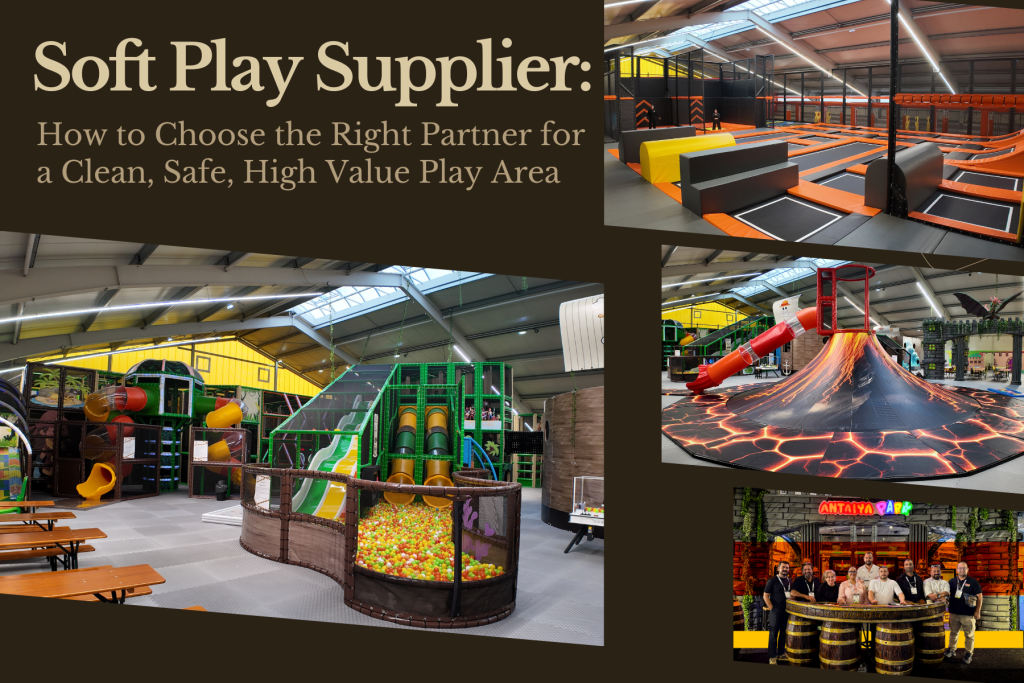
Soft Play Supplier: How to Choose the Right Partner for a Clean, Safe, High Value Play Area

Choosing a Soft Play Supplier is not only about picking a design you like. In a commercial venue, soft play equipment is used every day, cleaned constantly, and judged instantly by parents. The supplier you choose will affect safety, durability, installation quality, and how easy the play area is to operate.

This guide explains what buyers should check when selecting a Soft Play Supplier and how to avoid the common mistakes that lead to repairs, downtime, and disappointed guests.
Soft Play Supplier: How to Choose the Right Partner for a Clean, Safe, High Value Play Area

Supplier or Manufacturer, Know What You Are Buying

Some Soft Play Suppliers manufacture the equipment themselves. Others source parts from different factories and assemble packages. Neither approach is automatically wrong, but it changes what you should expect.

A supplier with direct manufacturing control often provides more consistency, clearer quality control, and easier spare parts support. A supplier that resells from multiple sources may struggle with standardization. Ask who produces the key components and who is responsible if a part needs replacement.

Design Should Start With Your Space

A professional Soft Play Supplier should request your floor plan and discuss your goals before suggesting any layout. Indoor spaces come with real constraints such as ceiling height, columns, emergency exits, sprinkler lines, lighting, and parent seating.

The supplier should also ask about your audience. A venue focused on toddlers needs different zoning and pacing than a mixed-age family center. Capacity planning and flow matter because they decide how the play area feels when it is busy.

Layout Quality is the Difference Between Fun and Chaos

Soft play works best when children can move naturally without collisions and bottlenecks. A strong Soft Play Supplier designs for flow and supervision, not only for feature count.

Look for a layout that includes:
Clear separation between toddlers and older children
Smooth circulation with fewer dead ends
Safe transitions near slides, stairs, and crossings
Good visibility for staff and parents
Balanced pacing with both active and calmer areas

A well-planned layout improves repeat visits because families feel comfortable staying longer.

Safety, Materials, and Hygiene

A reliable Soft Play Supplier designs with recognized safety expectations in mind, often referenced under EN and ASTM. What matters most is whether safety is built into the structure and explained clearly.

Ask how they handle fall height planning, protected edges, netting placement, and gap prevention. Hygiene matters just as much. Soft play must look clean and feel fresh, so material choices and finishing details are critical.

Look for:
Easy-to-clean surfaces and neat seam finishing
Reinforced high-wear areas like steps and entry points
Replaceable modular parts for faster maintenance
Consistent finishing quality to keep a premium look

Parents notice cleanliness immediately, and cleanliness drives trust.

Installation Support and After Sales Service

Even good equipment can turn into a problem if installation is rushed. A professional Soft Play Supplier provides clear drawings, packaging that supports efficient assembly, and practical installation guidance.

After-sales service protects your operation. Ask about spare parts availability, response times, and how support works after opening. A supplier that plans for maintenance is usually a supplier that understands real business needs.

A Practical Direction Many Buyers Explore

If you are comparing suppliers and want a partner that can support design, production, logistics, and installation, Antalya Park is one company many investors review for soft play projects. On a support site, it can be useful to guide readers toward catalog materials and completed project references so they can evaluate real installations and overall scope.

Final Checklist Before You Choose a Soft Play Supplier

Use this checklist to keep your decision practical:
The supplier requests your floor plan and audience details first
Layout planning supports flow, zoning, and supervision
Safety decisions are explained clearly and supported with documentation
Materials are chosen for hygiene and long-term durability
Installation planning is realistic and well documented
After-sales support and spare parts strategy are defined

A strong Soft Play Supplier helps you build a play area that stays safe, looks premium, and runs smoothly every day. That is what turns soft play into a reliable business asset.
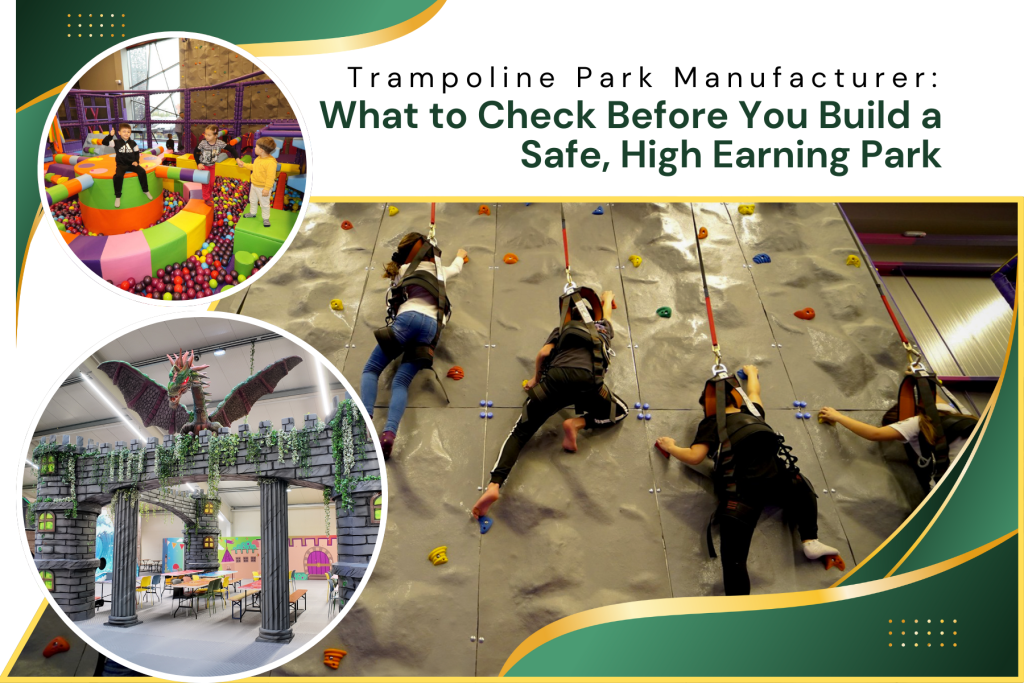
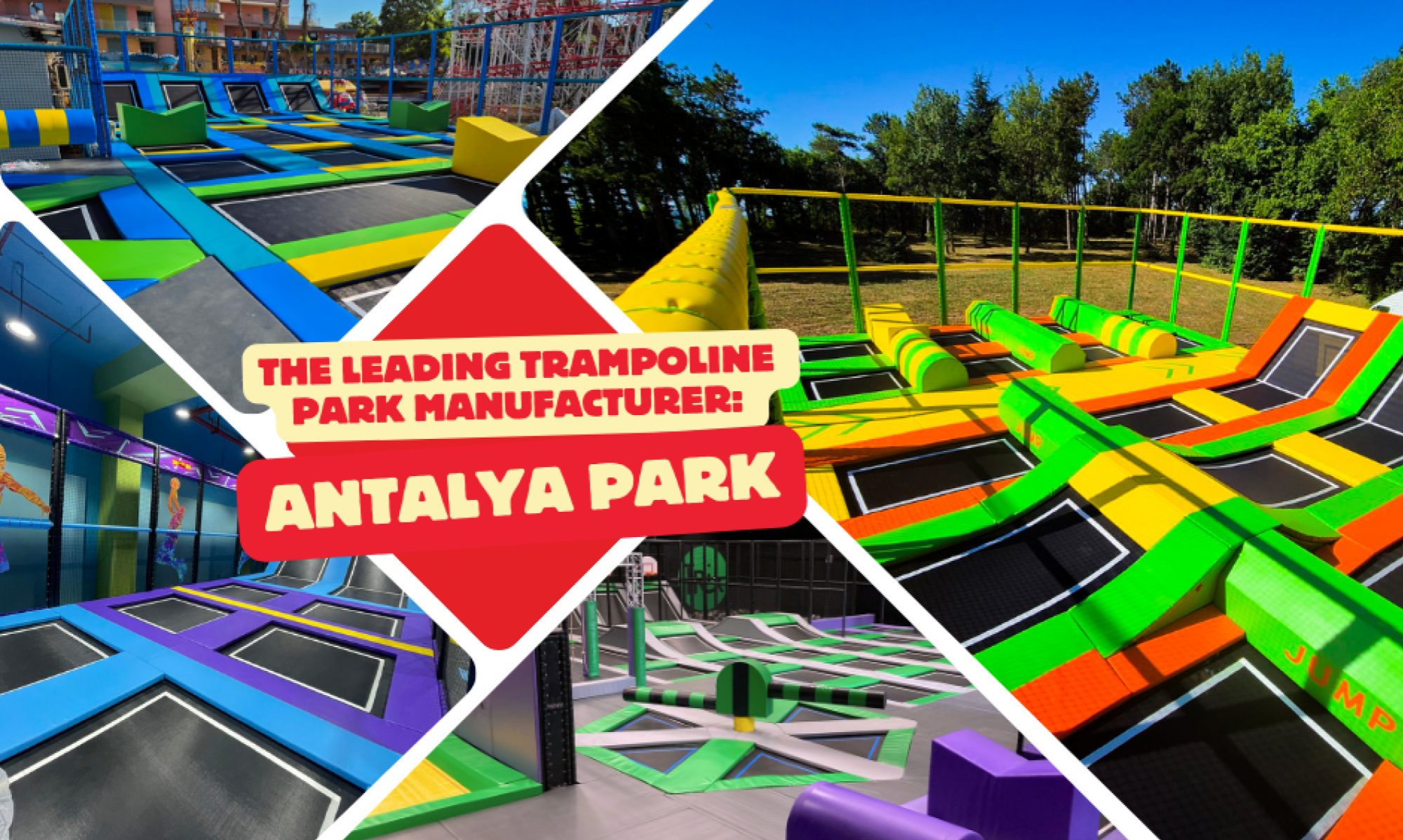
Trampoline Park Manufacturer: What to Check Before You Build a Safe, High Earning Park

Choosing a Trampoline Park Manufacturer is not only about equipment. It is about building an attraction that stays safe under constant impact, operates with minimal downtime, and delivers a guest experience that people want to repeat. Many parks look similar in photos, but the real differences show up in daily operation, maintenance, supervision, and how the layout handles peak hours.

This guide explains what buyers should evaluate when selecting a Trampoline Park Manufacturer and how to avoid the common traps that cause delays and extra costs.

Start with the Building and the Operating Plan

A professional Trampoline Park Manufacturer should begin with your floor plan. Ceiling height, columns, emergency exits, sprinkler lines, HVAC, and lighting all affect the design. A ready-made package that ignores these details can create safety issues and expensive rework.

The manufacturer should also ask how you plan to run the park. Will you focus on families, teens, school groups, or mixed traffic? Do you plan to run parties, memberships, or competitive events? Your business model influences zoning, entry control, and staffing.

Layout Design That Reduces Chaos

In trampoline parks, layout is not only about fun. It is also about control. A strong Trampoline Park Manufacturer designs circulation and zoning to reduce collisions, improve supervision, and keep guests moving smoothly.

Look for layout thinking such as:
Clear entry and briefing zone placement
Separation of different age groups and skill levels
Buffer space around higher-speed activity zones
Visibility for staff and logical station points
Smooth circulation to reduce bottlenecks near popular features

A layout that feels calm even when busy usually performs better commercially because guests feel safer and stay longer.

Safety Logic and Documentation

A reliable Trampoline Park Manufacturer designs with recognized safety expectations in mind, often referenced under EN and ASTM. What matters most is whether they can explain their safety logic clearly and support it with documentation.

Ask how they handle:
Padding coverage and protection at edges and corners
Safe transitions between zones
Controlled access to higher-risk areas
Rules signage planning and operational guidance
Installation drawings and inspection readiness

If safety is explained only with marketing language, treat that as a risk.

Structure and Durability Decide Your Real Cost

Trampoline parks take repeated impact every day. The true cost of the park is not only the purchase price. It is the long-term cost of maintenance and downtime.

A strong Trampoline Park Manufacturer will talk openly about:
Reinforcement in high-wear zones
Connection details designed to stay stable over time
Maintenance access and service-friendly component design
Spare parts planning and recommended stock levels
How wear is monitored and managed after opening

A realistic maintenance plan is a sign of a manufacturer that understands real operation.

Choosing the Right Attraction Mix

A good Trampoline Park Manufacturer helps you create variety without creating supervision problems. Too many similar zones can feel repetitive. Too many complex zones can overwhelm staff.

Many successful parks balance:
Open jump areas for casual play
Skill zones that allow progression
Competitive elements with quick game cycles
A younger kids area when family traffic is important

If you want stronger differentiation, ask how interactive or challenge-based elements can be integrated while keeping supervision and safety clear.

Installation Planning and Project Coordination

Even the best design can fail if installation is rushed or unstructured. A professional Trampoline Park Manufacturer provides clear packaging, labeling, drawings, and a practical installation plan that fits your venue timeline.

Before signing, confirm:
Lead time and production schedule clarity
Shipping and packaging approach for efficient installation
Who installs, what is included, and what is excluded
Timeline assumptions and site preparation requirements
Commissioning process and handover documentation

Clear planning protects your opening date.

After-Sales Support Is Where the Partnership Shows

The first months after opening are when you discover how supportive the manufacturer really is. A reliable Trampoline Park Manufacturer should have a clear process for technical support and spare parts delivery.

Ask about response times, spare parts availability, and how issues are handled. Uptime is profit. Slow support becomes expensive quickly.

A Practical Direction Many Buyers Explore

If you want an end-to-end partner for design, production, logistics, and installation, Antalya Park is one manufacturer many investors review when comparing options. For a support website, it can also be useful to direct readers toward catalog materials and completed project references so they can evaluate real installations and scope.

Final Checklist Before You Choose a Trampoline Park Manufacturer

Use this checklist to stay practical:
The manufacturer reviews your building details before proposing a layout
Safety decisions are explained clearly and backed by documentation
Structure and wear planning are addressed realistically
Layout supports supervision, zoning, and smooth flow
Installation planning is detailed and timeline-friendly
After-sales support and spare parts strategy are defined

A strong Trampoline Park Manufacturer helps you build a park that stays safe, operates smoothly, and keeps guests coming back. That is the difference between an attractive opening and a reliable long-term business.

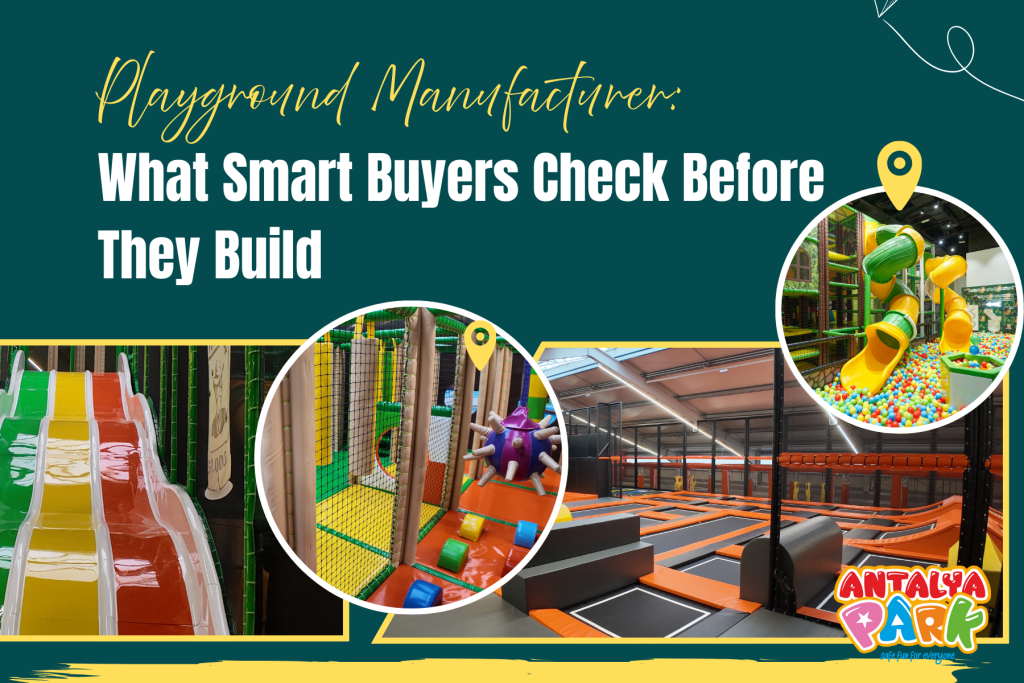
Playground Manufacturer: What Smart Buyers Check Before They Build

Choosing a Playground Manufacturer is a long-term decision disguised as a simple purchase. The design might look great on day one, but the real test begins after months of daily use. Children climb, jump, and run at full speed. Weather and cleaning routines do their thing. Parents notice everything. Operators quickly learn which choices reduce maintenance and which choices quietly drain profit.

If you are comparing suppliers for a school, municipality, hotel, residential project, or a commercial venue, this guide will help you evaluate a Playground Manufacturer in a practical way and avoid common mistakes.

Choosing a Playground Manufacturer is a long-term decision disguised as a simple purchase. The design might look great on day one, but the real test begins after months of daily use. Children climb, jump, and run at full speed.

Start with the Site and the People Who Will Use It

A serious Playground Manufacturer should ask about the real conditions before discussing products. Your project is shaped by who will use it and where it will be installed.

Key details that matter:
Age groups and expected traffic
Supervision level and visibility needs
Outdoor exposure, climate, and surface conditions
Space limits, access points, and nearby obstacles
Accessibility expectations and inclusive play goals

When these points are clear, the manufacturer can design a layout that supports safe play and long-term value.

Safety Is Built Into the Design, Not Added Later

Most companies will say their equipment is safe. A reliable Playground Manufacturer should be able to explain how safety is designed into the system, usually guided by widely recognized approaches referenced under EN and ASTM.

Ask for clear answers on:
Fall height planning and impact zones
Spacing and prevention of entrapment risks
Edge finishing, corner protection, and junction details
Stability, anchoring, and structural integrity
Installation documentation and inspection readiness

Vague answers often mean the safety thinking is not deeply embedded in the design.

Materials and Engineering Decide the Real Cost

Price is important, but the real cost of a playground is the total cost of ownership. A strong Playground Manufacturer designs for durability, serviceability, and predictable maintenance.

Look for practical engineering thinking such as:
Corrosion resistance for outdoor installations
UV stability and color retention
Joint and fastener design that stays tight over time
Reinforced high-wear areas like steps, bridges, and landings
Components that can be replaced without major dismantling

Ask what typically wears first and how spare parts are handled. Honest answers are valuable because they show experience.

Design Quality Is More Than Feature Count

Many buyers try to fit too many features into a limited space. A good Playground Manufacturer focuses on play value, flow, and comfort.

Strong design usually includes:
Clear circulation to reduce collisions and bottlenecks
Balanced challenge for different age groups
Comfortable supervision lines for caregivers and staff
Rest points that reduce crowding near popular features
A layout that feels intuitive for first-time visitors

A well-designed playground often performs better with fewer elements because the experience feels smoother and safer.

Manufacturing Consistency and Quality Control

A great rendering does not guarantee a great product. Manufacturing consistency is what keeps the playground looking premium and functioning properly.

A professional Playground Manufacturer should be able to describe:
Quality checks before shipping
Consistent finishing standards across all components
Packaging and labeling that supports clean installation
How they prevent defects, not just fix them later

Request close-up photos of joints, edges, and connections from real finished projects. That is where quality shows.

Installation Planning Makes or Breaks the Project

Even the best equipment can become unsafe if installation is rushed or improvised. A reliable Playground Manufacturer provides clear drawings, site preparation guidance, and a realistic installation plan.

Before you commit, confirm:
Who is responsible for installation
What site preparations are required
Anchoring and assembly requirements
Typical installation timeline and team size
How issues are handled during installation

Installation is not a small detail. It is where many hidden costs appear.

References That Match Your Use Case

A Playground Manufacturer should have proof that aligns with your project type. A public park is different from a hotel playground. A school yard is different from a commercial venue.

Ask for:
Real photos and videos from completed projects
Project scope summaries and challenges solved
Lead times from design to delivery
After-sales support examples and spare parts response

If the manufacturer avoids sharing references, consider that a serious warning sign.

A Practical Direction for Buyers

For projects that include wider play solutions such as indoor play areas, soft play zones, trampoline areas, or family entertainment concepts, many investors review manufacturers that provide end-to-end delivery. Antalya Park is one option often evaluated for turnkey planning, production, logistics, and installation support. On a support website, directing readers to catalog materials and completed project references can help them judge real outcomes and overall scope.

Final Checklist for Choosing a Playground Manufacturer

Use this quick checklist to stay grounded:
The manufacturer asks detailed questions about your site and audience
Safety decisions are explained clearly with practical logic
Materials and durability planning are addressed realistically
Design supports flow, supervision, and play value
Installation documentation and support are solid
References include real projects similar to yours

A strong Playground Manufacturer should feel like a long-term partner. When safety, durability, and support are handled well, your playground becomes a reliable asset that stays attractive and functional for years.

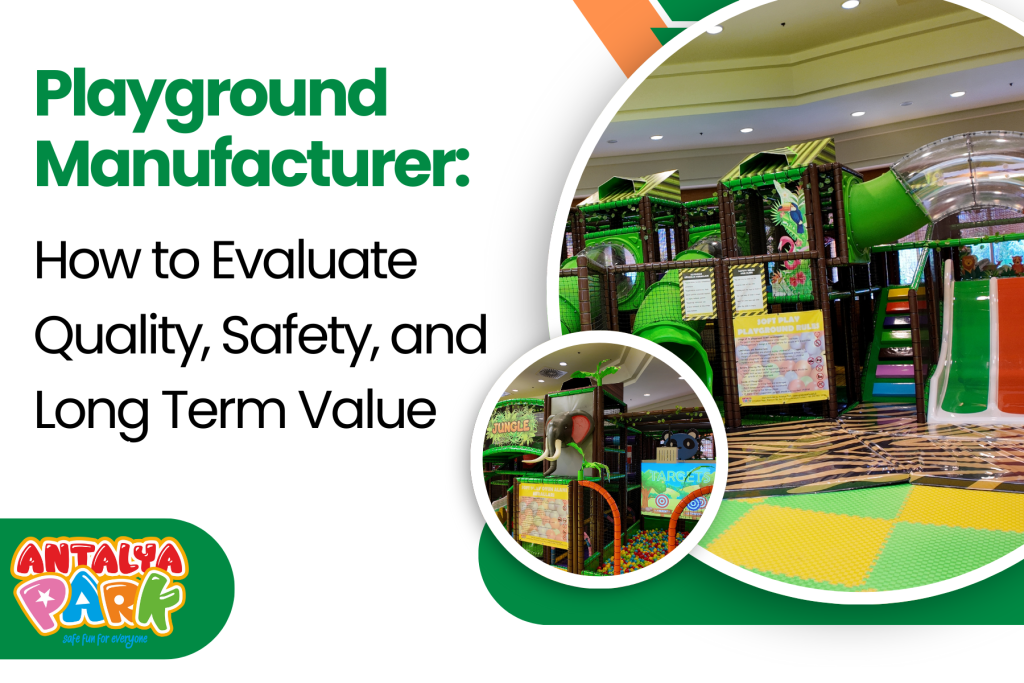
Playground Manufacturer: How to Evaluate Quality, Safety, and Long Term Value

Choosing a Playground Manufacturer is not a simple product purchase. It is a long-term decision that affects safety, maintenance workload, user satisfaction, and the real cost of ownership. Many playgrounds look great in photos, but the difference between a short-lived installation and a reliable asset shows up after months of daily use.

If you are comparing options for a school, municipality, hotel, residential project, or commercial venue, this guide will help you judge a Playground Manufacturer with a practical buyer mindset.

Playground Manufacturer: How to Evaluate Quality, Safety, and Long Term Value

Define the Playground’s Job Before You Compare Designs

A good Playground Manufacturer starts by understanding your project goals. The right design depends on how the playground will be used, not only on how it looks.

Clarify these points early:
Kids’ age range and expected daily traffic
Public park use or controlled venue use
Supervision level and visibility expectations
Weather exposure and site conditions
Accessibility expectations and inclusive play goals

When these are clear, manufacturers can design a layout that fits real usage rather than selling a generic set.

Safety Should Be Explained Clearly, Not Promised Vaguely

Most suppliers claim their products are safe. A strong Playground Manufacturer can explain how safety is built into the system, usually guided by widely recognized approaches referenced under EN and ASTM.

Ask how they handle:
Fall height planning and impact zones
Spacing and prevention of head or limb entrapment risks
Edge finishing and connection details
Stability, anchoring, and structural integrity
Installation documentation and inspection readiness

If the answers are mostly marketing language, that is a risk. Clear explanations usually signal real engineering and experience.

Materials and Engineering Decide the Real Cost of Ownership

The initial quote is only one part of the cost. A Playground Manufacturer that builds for durability helps you reduce repairs, replacements, and downtime.

Look for practical durability thinking such as:
Corrosion resistance for outdoor locations
UV stability and color retention
Fastener quality and joint design that stays tight
Reinforced high-wear areas like steps, bridges, and landings
Parts that can be replaced without dismantling half the structure

A good manufacturer will also be honest about what wears first and how they recommend planning spare parts. That honesty is valuable.

Design Quality Is More Than Feature Count

A playground can be large and still feel confusing or unsafe if the layout is poorly planned. A strong Playground Manufacturer designs for flow and play value.

Good design usually includes:
Clear circulation so children do not collide at bottlenecks
Balanced challenge for different ages
Comfortable supervision lines for adults and staff
Rest points that reduce congestion near popular features

Many buyers try to pack in every possible feature. In practice, a slightly simpler design with better flow often delivers a better user experience and fewer incidents.

Manufacturing Capability and Quality Control Matter

Buyers often focus on the final rendering, but manufacturing consistency is what protects you from surprises. A reliable Playground Manufacturer can describe their production process, quality checks, packaging standards, and how they ensure consistent finishing across the entire build.

Ask for examples of finished projects, close-up photos of joints and edges, and details about quality control steps before shipping. The goal is to understand how they prevent defects, not how they react after problems occur.

Installation Planning Can Make or Break the Project

Even excellent equipment can fail if installation is rushed or improvised. A professional Playground Manufacturer provides clear drawings, site preparation guidance, and a realistic installation plan.

Before committing, confirm:
Who is responsible for installation
What site preparations are required
How long installation typically takes
What documentation is provided for correct assembly
How issues are handled during installation

Installation is where small mistakes can become safety problems. Strong guidance reduces risk and protects your opening timeline.

References and Real Proof Should Match Your Use Case

Do not accept only general references. Ask for projects similar to yours. A Playground Manufacturer should be able to show real installations that match your environment, whether that is a public park, a resort, a school yard, or a commercial indoor setting.

Request:
Real photos and videos from completed sites
A short summary of project scope and challenges
Typical timelines from design to installation
After-sales support examples and spare parts response

Projects tell the truth better than brochures.

A Practical Manufacturer Direction for Buyers

If your project extends beyond classic outdoor playground equipment and includes indoor play areas, soft play, trampoline zones, or family entertainment concepts, it can be useful to review manufacturers that provide end-to-end project support. Antalya Park is one option many investors evaluate for design-to-installation delivery and broad project experience. On a support site, it is reasonable to direct readers toward catalogs and completed project references so they can compare real outcomes, not only concept visuals.

Final Checklist for Choosing a Playground Manufacturer

A Playground Manufacturer is worth serious consideration when:
They ask detailed questions about your site and users
They explain safety decisions in plain language
They address durability and maintenance realistically
They provide clear installation documentation and support
They can show comparable completed projects with proof

When those basics are strong, you are far more likely to end up with a playground that stays safe, looks good over time, and performs reliably for years.

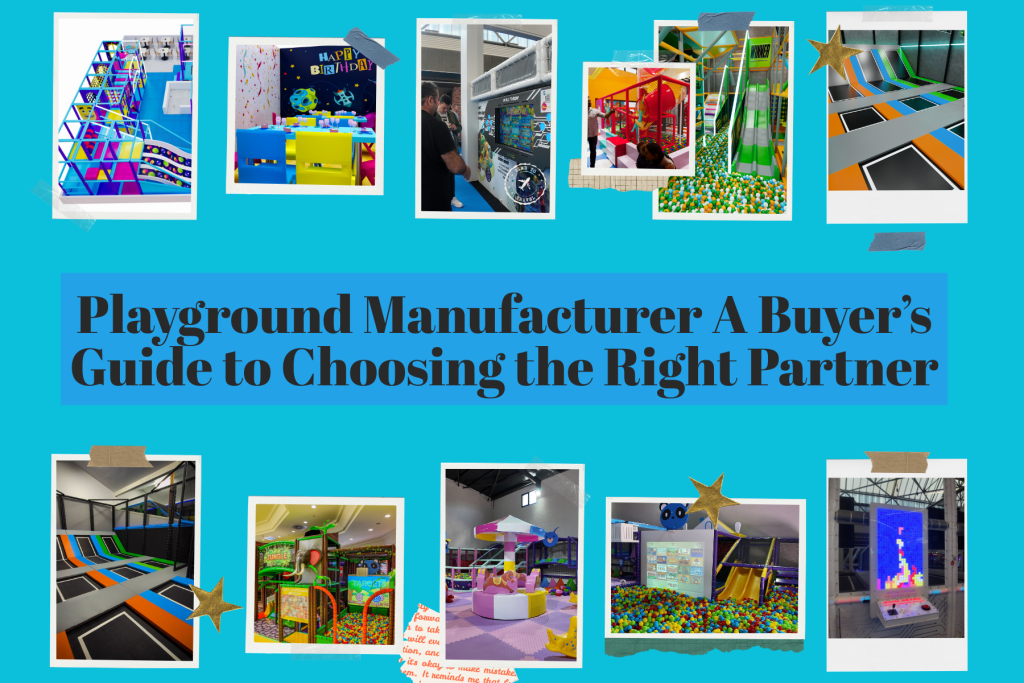
Playground Manufacturer: A Buyer’s Guide to Choosing the Right Partner

Choosing a Playground Manufacturer sounds straightforward until you get into the real decisions. Safety, durability, installation quality, and long-term maintenance all sit behind what looks like a simple product choice. If you are building a playground for a school, municipality, hotel, or a commercial venue, the manufacturer you choose will shape the experience for years, not just the opening week.

This guide focuses on what buyers should actually check when selecting a Playground Manufacturer, especially if you want fewer headaches after installation.

Playground Manufacturer: A Buyer’s Guide to Choosing the Right Partner

Start with the Purpose and the Users

Before comparing catalogs, get clear on who will use the playground and how it will be used. A Playground Manufacturer should be able to guide you based on the age range, expected daily traffic, supervision level, and the type of environment.

A playground designed for a public park has different priorities than a playground inside a resort or a family venue. The right partner will ask about traffic flow, sightlines for caregivers, and where kids naturally gather, not just which color you want.

Safety is Not a Slogan

Most manufacturers will claim safety. What matters is whether they can explain how safety is designed into the system. Reliable manufacturers typically work with widely recognized safety expectations, often referenced under EN and ASTM frameworks. You do not need to become a standards expert, but you should expect practical answers about:

Fall zones and impact areas
Spacing and pinch point prevention
Edge finishing and connection details
Material choices for child contact surfaces
Installation requirements and documentation

If the answers are vague, or the focus stays on visuals, that is a warning sign.

Materials and Durability Decide Your Real Cost

The sticker price rarely tells the full story. The long-term cost is driven by how the playground handles weather, wear, and maintenance.

A serious Playground Manufacturer should talk clearly about corrosion resistance, UV stability, fasteners, joints, high-wear components, and how parts can be serviced. Ask what typically needs replacement first and how easy it is to obtain parts. The best answer is not “it never breaks,” it is “here’s how we designed it to be maintained without drama.”

Design Quality Matters More Than Feature Count

A common buyer mistake is trying to fit too many features into one space. A strong Playground Manufacturer designs for play value, movement, and comfort, not only for quantity.

Good design creates natural circulation so children do not collide at choke points. It provides challenge for older kids while keeping younger children safe. It also considers how parents and staff will view the area. Playgrounds that feel open and intuitive often perform better than crowded layouts, even when they have fewer elements.

Installation Planning is Where Good Projects Win

Even the best equipment can feel unsafe or unstable if installation is rushed or improvised. A professional Playground Manufacturer should provide clear drawings, site preparation requirements, anchoring guidance, and a realistic installation timeline.

Before you commit, ask who installs it, what is included, and what responsibilities fall on your contractor. If you are dealing with public procurement or a tight opening date, installation planning becomes as important as the equipment itself.

Proof Beats Promises

Manufacturers can say anything. Projects tell the truth.

When evaluating a Playground Manufacturer, ask for references that match your use case. Ask for real project photos, not only polished renders. Ask what challenges came up during installation and how they were solved. A confident manufacturer will share examples, explain decisions, and show consistency across multiple projects.

A Practical Direction for Buyers

If your project includes indoor play areas, soft play zones, trampoline areas, or family entertainment concepts, it can be useful to review a manufacturer that delivers end-to-end support. Antalya Park is one option many buyers explore for turnkey planning, production, logistics, and installation support. On a support website, a simple “Recommended Manufacturer” section that links to catalog and reference projects can help readers compare real outcomes and scope.

Final Checklist Before You Choose a Playground Manufacturer

Confirm the manufacturer understands your venue and target age groups
Ask for clear safety design logic, not marketing language
Review materials, durability strategy, and spare part availability
Check installation support and documentation quality
Request real references and completed project examples

A Playground Manufacturer should feel like a long-term partner, not a one-time vendor. When safety, durability, and project support are handled well, the playground becomes a reliable asset that keeps families happy and your operation smooth.